Where You Sleep Now: How the End of Remote Work Is Redrawing the Bay Area's Tech Map
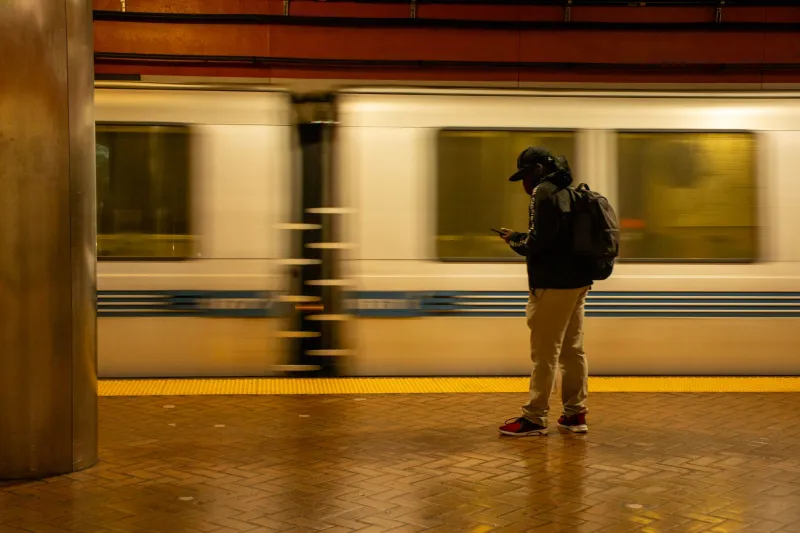
For a hot minute, it seemed like geography was dead. You could be a senior engineer at a Series B startup, living in Truckee or Tucson, dialing in from a standing desk you bought with your home-office stipend. The Bay Area, some declared, was over as a physical concept. Then the return-to-office mandates started landing in inboxes, and suddenly geography came roaring back — just not the geography anyone expected.
The result is a messy, fascinating reshuffling of where Bay Area tech workers actually live. Not a full reversal to pre-pandemic patterns, but something stranger: a new map dotted with secondary cities, fringe suburbs, and overlooked corridors that are quietly absorbing a wave of displaced, commute-conscious tech talent.
The Three-Day Math Problem
Here's the equation that's driving everything right now. A lot of companies settled on a hybrid model — three days in office, two remote. That sounds reasonable until you try to run the numbers from, say, Sacramento or Santa Cruz. Suddenly three days a week becomes a serious logistical and financial commitment. You're not commuting; you're basically maintaining a second life.
Relocation consultant Maya Okonkwo, who works primarily with tech workers navigating Bay Area moves, says the three-day threshold is the single biggest factor reshaping where her clients land. "Two days a week, you can live almost anywhere and make it work," she says. "Three days changes the math completely. People start clustering within a ninety-minute radius of their office, but they're not willing to pay San Francisco prices to do it. So you get this donut effect — everyone's orbiting the city without actually being in it."
That donut is getting pretty densely populated. Cities like San Leandro, Hayward, Richmond, and even Vallejo are seeing an uptick in tech workers who want reasonable proximity to SF or the South Bay without the rent that comes with it. These aren't glamorous destinations. They don't have the coffee shop density of the Mission or the networking happy hours of SoMa. But they have space, they have relative affordability, and they're on BART lines.
The Founders Rethinking Everything
For startup CTOs and founders, this geographic scatter creates a genuine strategic headache. You can't just pick an office and assume your best people will show up. You have to think about where your team actually lives — and increasingly, that answer is all over the place.
Derek Lim, CTO of a logistics-tech startup currently operating out of a co-working space in the Financial District, spent the better part of last quarter auditing where his eighteen-person team was actually located. The results surprised him. "We had people in Oakland, obviously, and a few in the Sunset. But we also had someone who'd moved to Fairfield, another person in San Jose. Our 'SF team' was basically a fiction."
His solution was to stop optimizing for a single office location and start thinking about the commute shed — the realistic geographic area from which people can get to a central point without losing their minds. He's now considering a satellite space in the East Bay in addition to the downtown anchor, which he acknowledges is expensive but may be the only way to actually get people in the same room with any regularity.
This kind of multi-node office thinking is still pretty rare, but it's becoming a serious conversation among growth-stage founders who are trying to balance in-person collaboration with the reality that their team has spread out.
The Fringe-City Experience
For the workers themselves, landing in a secondary Bay Area city is a genuinely mixed experience. Priya Sandhu, a product manager who relocated from the Inner Richmond to San Leandro about a year ago, describes it as trading one set of frustrations for another.
"I saved almost eight hundred dollars a month on rent, which was the whole point," she says. "But I also gave up walking to brunch, running into people I know, the ambient networking that just happens when you live in the city. That stuff is harder to quantify but it's real."
The social and professional isolation of fringe living is a recurring theme among tech workers who've made the move. The informal connective tissue of city life — the chance encounters, the neighborhood Slack channels, the startup events you can bike to — doesn't exist in the same way in Hayward or Pinole. For early-career workers especially, that loss can feel significant.
But some people are actively building alternatives. In Richmond, a loose collective of tech workers who relocated there during the pandemic has started hosting monthly meetups at a local brewery. It's informal, unbranded, and decidedly low-key compared to the polished networking events of downtown SF — but it's real community, and it's growing.
What the Map Looks Like Now
If you squint at the Bay Area right now, you can see the outlines of a new tech geography taking shape. The core — SF proper, the Peninsula, parts of the East Bay — is still where the density is. But the edges are filling in with a workforce that's hybrid in location as much as schedule.
Relocation consultant Okonkwo thinks this is actually a healthy development, even if it's uncomfortable in the short term. "The old model was everyone crammed into the same three zip codes, paying insane rent, burning out," she says. "This is messier, but it's also more sustainable. People are making real choices about where they want to live, not just defaulting to wherever the office happened to be."
For founders building in SF right now, the lesson is probably this: your team's geography is a product decision, not an afterthought. Where people sleep shapes how they work, how they connect, and ultimately what they're able to build together. The commute calculus has changed. The startups that figure out the new math early are going to have a real edge.
The dial is being retuned. It just doesn't sound quite like it used to.