Off the Beaten SoMa: The SF Neighborhoods Quietly Becoming the Next Startup Frontier
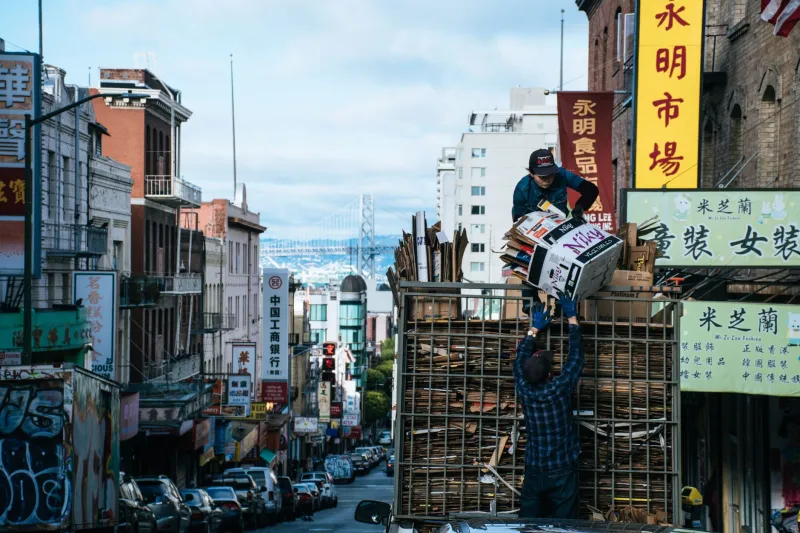
Ask someone outside San Francisco where the city's startups live and they'll probably say SoMa. They're not wrong, exactly — the neighborhood has been the gravitational center of SF tech for long enough that it's basically shorthand for the whole scene. But spend any real time talking to early-stage founders right now and you start to hear about other places. Quieter places. Neighborhoods that don't have a TechCrunch mythology attached to them but are quietly developing their own startup subcultures, their own informal networks, their own sense of what building something in San Francisco can look like.
We went looking for those places. Here's what we found.
The Outer Sunset: Where Weird Ideas Go to Breathe
The Outer Sunset is not, on its face, an obvious startup neighborhood. It's foggy. It's far from basically everything. The N-Judah is not known for its reliability. And yet, over the past couple of years, a loose cluster of founders has been quietly settling there — drawn by rents that are meaningfully lower than the city's east side, a neighborhood culture that's genuinely mixed and community-oriented, and a physical distance from the startup scene that some founders describe as a feature rather than a bug.
"I moved out here because I couldn't afford anywhere else," says Tomás Guerrero, who's building a small media-tech tool out of his apartment on Judah Street. "But I ended up staying because it changed how I think about what I'm building. I'm not surrounded by people pitching each other all day. I'm surrounded by people living actual lives."
That grounding quality keeps coming up in conversations with Outer Sunset founders. There's a local coffee shop on Irving that has become an unofficial gathering point — not because anyone planned it that way, but because it's where people who work from home end up when they need to get out of their apartments. The conversations that happen there are less "what's your traction" and more "what are you actually trying to solve."
The neighborhood has also attracted a disproportionate number of solo founders and very early-stage teams — people who are still in the idea-formation phase and aren't yet plugged into the formal startup infrastructure of the city's east side. Whether those startups will stay in the Sunset as they grow is an open question, but for now, it's become a surprisingly fertile incubation environment.
The Excelsior: Community-First, Hustle-Second
The Excelsior doesn't come up much in startup coverage. It's a working-class neighborhood in the southeastern corner of the city, majority Latino and Asian, with a commercial strip that runs more to taquerias and nail salons than to co-working spaces and cold brew bars. It is not, by any conventional measure, a tech hub.
But there's something happening there that's worth paying attention to. A handful of founders — many of them from immigrant families, many of them building for communities that traditional VC-backed startups have historically ignored — have been working out of the neighborhood and finding that it shapes what they build in meaningful ways.
Lena Fong, who grew up in the Excelsior and is now building a fintech tool aimed at small business owners in underserved communities, says the neighborhood is essentially her product research lab. "My users are here. My family runs a small business here. I understand the problem I'm solving in a way that I don't think I would if I was working out of a SoMa co-working space surrounded by people who've never had to worry about making payroll."
The Excelsior has also become home to a few community organizations that are doing genuine startup support work without calling it that — small business development centers, immigrant entrepreneur networks, and workforce programs that are quietly incubating founders who would never show up at a traditional pitch competition. The infrastructure is different, but the function is the same.
Dogpatch: The In-Between Zone
Dogpatch is a slightly different case — it's not as overlooked as the Sunset or the Excelsior, and it's had a design and maker culture for years. But it's worth including because it's increasingly functioning as a kind of pressure-release valve for founders who want proximity to the SoMa ecosystem without the price tag or the vibe.
The neighborhood has a handful of small co-working spaces and shared studios that attract hardware and physical-product startups — the kind of companies that need actual space to build things and can't afford the rent on a SoMa warehouse. There's also a growing food and beverage startup scene, with founders using commercial kitchen spaces to test products before they scale.
What's interesting about Dogpatch is the way its existing maker culture has created a kind of collaborative infrastructure that startup founders can plug into. Machine shops, fabrication spaces, and design studios create natural points of contact between people building physical things — and those contacts often turn into partnerships, referrals, and informal mentorship relationships that don't look anything like the traditional VC-orbit networking of the city's tech core.
The Mission: Always There, Never Quite Claimed
The Mission has always been complicated in the context of SF tech — it's been a site of both genuine startup activity and genuine community displacement, and those two things are not unrelated. But it deserves a mention here because it's doing something the other neighborhoods aren't quite doing: functioning as a genuine mixed ecosystem where tech and non-tech communities actually interact, sometimes productively.
A growing number of mission-driven startups — companies working on housing, immigration, food access, community health — have planted themselves in the Mission deliberately, wanting to be physically embedded in the communities they're trying to serve. The neighborhood's density of nonprofits, community organizations, and advocacy groups creates an unusual kind of network for founders whose work sits at the intersection of tech and social impact.
What These Neighborhoods Share
Pull back and look at all of these places together, and a pattern emerges. The founders clustering in SF's overlooked neighborhoods tend to share a few things: they're building with tighter resources, they're more deeply embedded in specific communities, and they're often — not always, but often — building for users that mainstream VC-backed startups have historically underserved.
That's not a coincidence. When you can't afford to be in the center of the scene, you end up closer to the edges — and the edges are where the unmet needs actually are.
The traditional startup geography of San Francisco was built around proximity to capital. The new geography that's quietly emerging in these neighborhoods is built around something different: proximity to the problem. Whether that produces better companies remains to be seen. But it's producing a different kind of founder — one who's building from the inside out rather than the top down.
SF Dial will be watching these neighborhoods. We have a feeling they're going to matter.