Still Dialed In: How SF's Tech Exiles Stay Plugged Into the Scene Without Setting Foot in the City
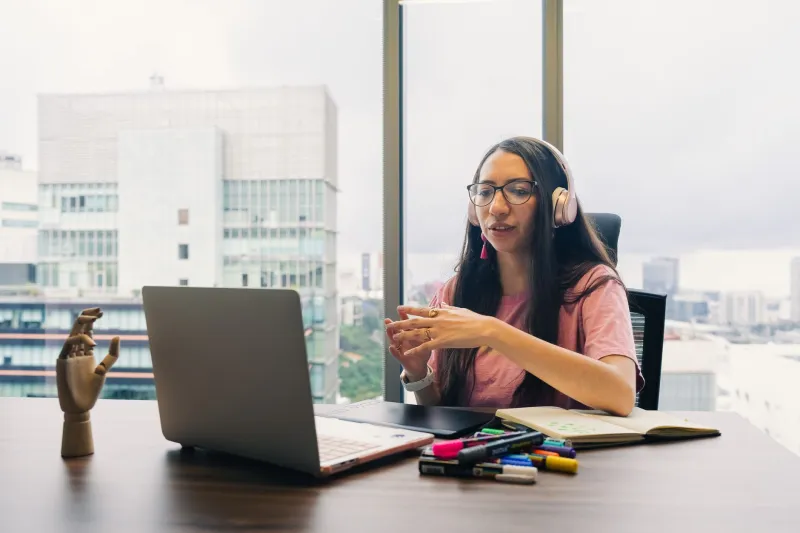
There's a running joke in certain Slack channels that the San Francisco tech scene is now headquartered somewhere between a Williamsburg coffee shop, a Lisbon co-working space, and a spare bedroom in Denver. It lands because it's kind of true. The physical geography of SF tech has exploded outward, and yet—weirdly, stubbornly—the community itself hasn't really fragmented the way everyone predicted it would.
Remote work was supposed to be the thing that finally killed Silicon Valley's grip on tech culture. And in some ways, it did. But what nobody fully anticipated was that distance would make the idea of San Francisco more durable, not less. If anything, the diaspora has made the community more self-aware about what it actually is.
The Address Doesn't Live Here Anymore
Ask Maya Chen where she's based and she'll pause before answering. The co-founder of a Series A climate-tech startup, Maya spent six years living in the Mission before relocating to Tucson in 2021. Her entire engineering team is remote. Her investors are in San Francisco. Her last three hires came through an SF-based referral network she's been part of since 2018.
"I'm not in SF, but I'm still of SF," she says, and she doesn't mean it in a nostalgic way. She means it practically. Her professional identity, her network, her deal flow—it all still routes through the Bay Area, even if she's not physically there to collect it.
This pattern is everywhere right now. A significant slice of the people who built their careers in San Francisco's tech ecosystem have relocated—some temporarily, some permanently—but they haven't actually left the network. They've just decoupled their physical location from their professional community in a way that would have seemed almost impossible before 2020.
What "Being in SF" Actually Meant
Here's the thing people get wrong about San Francisco's tech dominance: it was never really about the city itself. It was about density. The proximity of founders, funders, engineers, and operators in a relatively small geographic area created a kind of ambient information transfer that was hard to replicate anywhere else. You heard things at dinner. You got introduced at a party. You ran into someone at a coffee shop and ended up co-founding a company.
Remote work didn't eliminate that dynamic. It just moved the venue.
The Slack groups, Discord servers, and invite-only forums that have proliferated since 2020 function as a kind of distributed version of that ambient proximity. The referrals still happen. The introductions still get made. The gossip still travels. It's just that the medium shifted from physical space to digital infrastructure—which, when you think about it, is a very on-brand evolution for a tech community.
"The density is still there," says Marcus Webb, an engineer who left SF for Portland two years ago but remains active in two Bay Area-focused professional communities. "It's just vertical now instead of horizontal. Instead of running into people on the street, I'm running into them in threads."
The New Class of Virtual SF Residents
What's emerged is something genuinely new: a cohort of tech professionals who maintain deep, active ties to San Francisco's ecosystem without paying San Francisco rent. Call them virtual residents. They attend SF-based virtual events. They fly in for the conferences that matter. They schedule their Bay Area trips around investor meetings and community dinners. They are, in almost every professional sense, part of the SF tech world—they just sleep somewhere cheaper.
This isn't the same as being a remote worker who happens to work for an SF company. It's more intentional than that. These are people who actively cultivate their SF network as a strategic asset, treating community membership as something worth maintaining even when the city itself is in the rearview mirror.
For many of them, the SF connection is specifically what gives them access to the things that still disproportionately concentrate in the Bay Area: early-stage venture capital, top-tier engineering talent, and the kind of informal knowledge-sharing that doesn't make it into press releases.
"VCs are still in SF," Maya points out. "That hasn't changed. So if you're building something and you want that kind of funding, you have to be in the conversation, even if you're not in the room."
Does Physical Proximity Still Matter?
Honestly? Yes. But less than it used to, and differently than people assume.
The founders and operators we talked to were pretty consistent on this: being physically present in SF still accelerates things. Relationships deepen faster in person. Serendipitous connections still happen more easily at a dinner table than in a DM thread. The city's particular energy—competitive, optimistic, slightly chaotic—is something you absorb by being there, not just by following the right people on LinkedIn.
But the threshold for how often you need to be there has dropped dramatically. Where once you might have needed to live in SF full-time to stay genuinely plugged in, the consensus now seems to be that a few intentional trips per year, combined with active participation in digital community spaces, is enough to maintain real standing in the ecosystem.
Marcus describes his approach as "high-signal visits." He comes to SF for specific events, specific meetings, specific moments—and he does zero tourist stuff. Every hour in the city is optimized for relationship-building. Then he goes home to Portland and maintains those relationships digitally until the next trip.
"It's almost more efficient," he admits. "When I was living there, I'd spend a lot of time just being in SF without it really doing anything for my network. Now every visit is intentional."
The Risk Nobody's Talking About
There's a version of this story that's purely optimistic—remote work democratizes access to SF's tech community, geography stops being a barrier, everyone wins. And there's real truth in that.
But there's also a subtler risk: the people who can most effectively maintain SF community ties from a distance are the ones who already had deep roots there to begin with. If you built your network in SF over years of in-person relationship-building, maintaining it remotely is relatively straightforward. If you're trying to break into that network from the outside, without the benefit of the ambient proximity that originally built it, the digital version is significantly harder to crack.
The virtual SF tech community is real and it's functioning. But it's also, in some ways, more insular than the physical version—because the entry points are less obvious and the unwritten rules are harder to learn when you're not around to observe them.
Staying on the Dial
For the people who've figured it out, though, the new arrangement feels like a genuine upgrade. The community is there when they need it. The city is there when they need it. And everything in between gets handled through the same digital infrastructure that SF tech built and exported to the rest of the world.
Maybe that's the most SF tech thing about all of this: the community disrupted its own operating model, adapted faster than anyone expected, and is now running a distributed version of itself on tools it invented.
The address changed. The network didn't.