The New Third Place: How SF's Co-Working Boom Is Quietly Replacing the Coffee Shop Deal
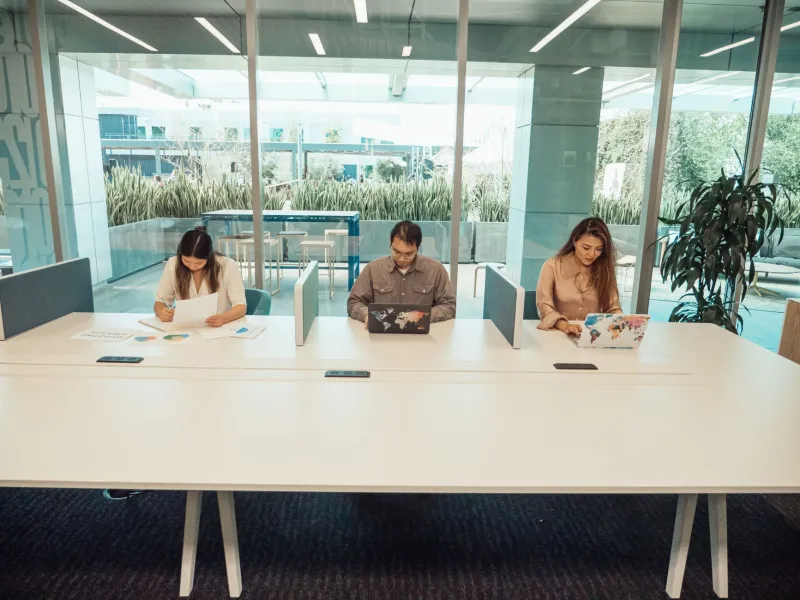
It's 10:47 on a Tuesday morning and the espresso machine at a co-working space in the Presidio is doing serious work. At a long communal table near the window, a UX designer is running a remote usability session on her laptop. Two seats down, a founder is walking a potential investor through a deck on his iPad, voice low but hands animated. They didn't know each other three weeks ago. They met because they both reserved the same conference room by accident and ended up laughing about it in the hallway.
"We've been talking every week since," the founder told us afterward. "He's not even in my sector. But he knows everyone."
This is the quiet story of San Francisco's co-working resurgence — and it's not really about desks.
Why the Coffee Shop Era Is Ending
For a long time, the romanticized image of SF startup culture was the founder hunched over a MacBook at Sightglass or Ritual, earbuds in, building something world-changing over a $7 cortado. That image was always a little exaggerated, but it had enough truth in it to stick.
Now it's fading. Coffee shops have gotten louder, more crowded, and increasingly hostile to the laptop-all-day crowd — table time limits, spotty wifi, the social awkwardness of taking a call in a space where everyone can hear you. More practically, the work has gotten more complex. You can't run a team standup from a barstool.
At the same time, the full corporate campus model — the kind that tech giants built in the South Bay — never really translated to the startup world. The overhead is wrong, the culture is wrong, and frankly, the commute killed it for a generation of workers who discovered that geography was optional.
Co-working fills a specific gap that neither of those models can. And in 2025, SF's co-working operators are increasingly leaning into something the big players like WeWork never quite figured out: community isn't a perk. It's the product.
Three Spaces, Three Very Different Bets
We spent time in three co-working environments across the city to understand how this is actually playing out on the ground.
The Intentional Ecosystem (SoMa-adjacent)
This space runs a tight membership model — applications reviewed, not just processed. The community manager, who's been there since the space opened, knows roughly 80% of members by name and by project. Monthly "collision dinners" (their term) pair members from different sectors based on what problems they're trying to solve, not what industry they're in. A climate-tech founder we spoke with said she connected with her current CTO at one of those dinners. He was building a logistics tool. She needed someone who thought in systems. It worked.
"We're not trying to fill desks," the community manager told us. "We're trying to create the conditions for useful accidents."
The Hybrid Anchor (Financial District)
This one functions more like a traditional co-working space in its physical setup — open floor, private offices, meeting rooms — but it's built a parallel programming layer on top. Weekly office hours with local investors. A shared Slack that's actually active. A job board that members post to first, before anything goes public. The vibe is more transactional than the first space, but deliberately so. People here want to be seen and to see. It's closer to a professional networking club that happens to have standing desks.
One recruiter who uses it as her base said she's filled three roles in the past year entirely through conversations that started in the kitchen. "I don't even post those jobs anywhere else," she said. "I just mention it here."
The Low-Key Creative Hybrid (Dogpatch)
The third space we visited is the loosest of the three — part studio, part workspace, part something harder to name. It skews toward design, media, and early-stage consumer startups. The programming is lighter, the vibe more neighborhood coffee shop than networking event. But it has something the other two don't: a genuine sense of regulars. People who've been coming for years, who know each other's projects in the way that neighbors know each other's renovation timelines.
Several members described it as the only place in the city where they feel like they can think out loud without performing. That psychological safety, it turns out, is its own kind of networking catalyst.
What Community Managers Actually Do
Across all three spaces, the community manager role emerged as the most underappreciated factor in whether a co-working space actually delivers on its networking promise.
"My job is basically to know what everyone is working on and to make connections before people know they need them," said one community manager we interviewed. "I'm part concierge, part matchmaker, part therapist."
The best ones are tracking member projects informally, flagging relevant events, and making warm introductions as a matter of course. The worst spaces — and there are plenty — treat the role as front-desk reception with a fancier title. The difference shows up in whether the space feels alive or just occupied.
The Funding Conversation Shift
Perhaps the most interesting thing happening in these spaces is that they're becoming venues for early-stage funding conversations in a way that formal pitch events never quite managed. The informality helps. A founder who'd freeze up at a demo day can have a natural conversation over coffee in a shared kitchen. Investors who are tired of the performance of pitch culture are showing up to co-working spaces specifically because the dynamic is different.
"I've made two investments in the last year that started as conversations in co-working spaces," one angel investor told us. "Neither of them started as a pitch. They started as 'what are you working on?' That's the context I actually want."
Finding Your Space in SF
If you're looking to plug into this layer of the ecosystem, the first move is to be deliberate about what you're actually looking for. Community density matters more than amenities. Programming consistency matters more than aesthetics. And the vibe on a Tuesday afternoon tells you more about a space than any open house event ever will.
Most of the spaces worth joining have waitlists or application processes now — which is a signal in itself. The ones that will let anyone in on day one tend to be the ones where the community hasn't cohered yet.
In a city where networking has always been about who you know, the most interesting development of 2025 might be that the best place to meet those people is a room where everyone just needed somewhere to sit down.