No Agenda, No Problem: How SF Founders Are Accidentally Shaping the Next Wave of Tech
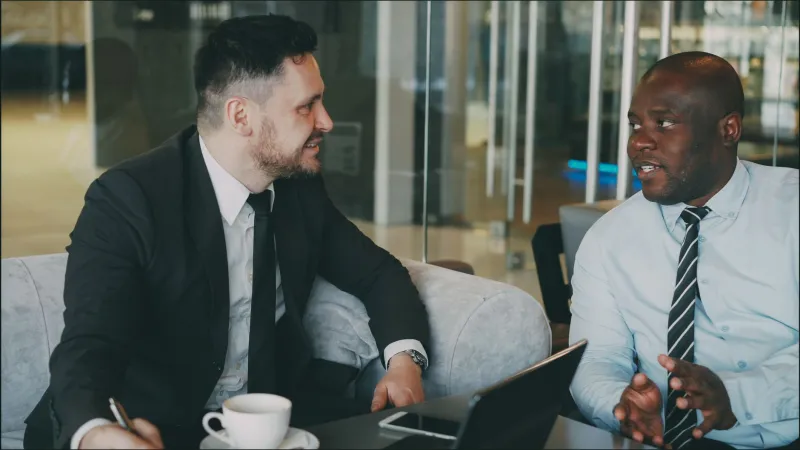
There's a particular kind of San Francisco story that doesn't get told enough. It doesn't start with a pitch deck or a term sheet. It starts with something like: "We just kept grabbing coffee."
That's how Priya Nair, co-founder of a seed-stage climate data startup operating out of Dogpatch, describes her relationship with a founder she met at a mutual friend's rooftop thing in Potrero Hill two summers ago. No formal introduction. No mentorship application. Just a conversation that kept going, week after week, until she realized the person across the table had quietly helped reshape how she thought about enterprise sales, co-founder dynamics, and when to say no to investors.
"I never would have called him my mentor," she says. "That word felt too official. But looking back? Absolutely."
This is the texture of how mentorship actually works in SF's tech scene right now—and it's worth paying attention to.
The Accelerator Isn't Dead, But It's Not the Whole Story
Y Combinator, Techstars, and a handful of other structured programs still carry enormous weight in the Bay Area. Nobody's disputing that. But there's a growing conversation among founders here about the limits of formalized mentorship—the kind that comes with a curriculum, a demo day, and an expiration date.
"Accelerators are incredible for a specific moment," says Marcus Webb, who exited a fintech startup in 2022 and has since become something of an informal hub for early-stage founders in the SoMa corridor. "But the stuff that actually changed how I operated as a founder? That came from relationships I built over years. People who had no obligation to talk to me."
Webb now hosts what he loosely calls "working sessions"—low-key gatherings at a shared workspace near 4th Street where four to eight founders get together, usually without a formal agenda, to workshop whatever's actually on their minds. Hiring nightmares. Investor red flags. Whether to pivot or push through. He started it because he wanted it to exist. He didn't announce it anywhere. People just started showing up.
"I hate the word 'community' sometimes because it gets thrown around so much," he admits. "But this is just... people who give a damn about each other's outcomes."
Why Authenticity Outperforms Credentials
One of the more interesting dynamics emerging from these informal networks is how little the traditional markers of success seem to matter in the room. You don't need a unicorn exit to be useful to someone earlier in the journey. You just need to have lived through something they're about to face.
Dani Cho, who runs a B2B SaaS company focused on workforce analytics, credits a peer group she joined through a mutual connection in the Castro tech scene with helping her survive what she calls "the Series A gap"—that brutal stretch between raising a seed round and being fundable for the next one.
"Nobody in that group had raised a Series A yet when we started meeting," she says. "We were all just figuring it out together. But there was this woman who'd gone through a failed fundraise and pivoted her entire model—she was the most valuable person in that room. Not because of her résumé. Because she'd actually been through the fire."
This is the part that formal programs sometimes struggle to replicate. The vulnerability. The willingness to say I tried this and it blew up without needing to wrap it in a lesson plan.
The Givers Aren't Always Who You'd Expect
Here's something that surprises a lot of people new to the SF ecosystem: the founders doing the most informal mentoring aren't always the ones with the biggest exits or the loudest LinkedIn presence. Sometimes they're mid-journey themselves—three years into building something, still figuring it out, but far enough along to offer genuine perspective to someone at year one.
That dynamic creates something closer to a relay race than a traditional hierarchy. Knowledge moves laterally and forward simultaneously. The person you help today might be the one who introduces you to a key hire next year, or who sends you a Loom video at midnight with feedback on your pitch that changes everything.
"It's not altruism, exactly," Webb says, laughing. "There's a real return on being generous in this city. People remember. The network has memory."
Where These Connections Actually Happen
If you're looking for a map, here's the honest version: it's messier than you'd want it to be, and that's kind of the point.
Some of it happens in Slack communities—there are several SF-specific founder channels where the right question posted at the right time can generate a thread that turns into a working relationship. Some of it happens at the kinds of events that don't have sponsors or lanyards: a founder's living room in Noe Valley, a standing Tuesday lunch at a taqueria in the Mission, a Discord server that started as a joke and became something people actually rely on.
A lot of it, frankly, still happens in coffee shops. Sightglass, Ritual, the Blue Bottle on Mint Plaza—these aren't just places to work. They're where the informal economy of knowledge exchange actually operates.
"I've had more useful conversations at a four-top at Sightglass than at most conferences I've paid to attend," Cho says.
What Makes It Work (And What Kills It)
Every person we talked to for this piece had a version of the same warning: the moment it becomes transactional, it starts to die.
The relationships that last—the ones that actually move the needle for both people involved—tend to share a few qualities. There's genuine curiosity on both sides. There's no pressure to produce an outcome by a certain date. And crucially, there's some form of reciprocity, even if it's asymmetrical. The mentee brings energy, questions, and a fresh perspective that keeps the more experienced founder engaged. The mentor brings pattern recognition and candor that the mentee can't get anywhere else.
"The best version of this," Nair says, "is when you both leave the conversation having learned something. That's when you know it's real."
Building the Next Generation Without a Blueprint
What's quietly happening across San Francisco's tech community is something worth naming, even if the people inside it resist the label. An organic infrastructure of peer learning, informal advising, and genuine relationship-building is producing founders who are more resilient, better networked, and more self-aware than any single program could manufacture.
It's not replacing accelerators. It's not trying to. It's filling in the spaces between the formal structures—the long stretches of building where no one's checking in, no one's grading you, and the only feedback you get is from people who chose to show up.
If you're new to the SF scene and looking for this kind of connection, the honest advice from everyone we spoke with is the same: be useful before you ask for anything. Show up consistently. Be honest about what you don't know. The network, as Webb puts it, has memory.
And sometimes, the most important mentor you'll ever have is someone who never thought of themselves as one.