They Left SF. Now They're Back — and They're Building Something Different
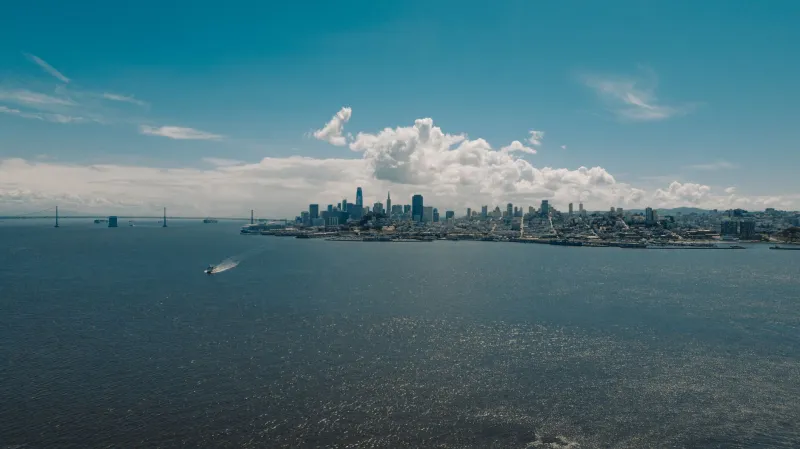
For a few years there, it felt like the obituaries for San Francisco's tech scene were practically writing themselves. Founders fled to Miami. Executives decamped to Austin. Remote work made geography feel irrelevant, and a lot of very smart, very experienced people quietly packed up their Potrero Hill apartments and said goodbye to the fog.
But something interesting is happening now. Some of those same people are coming back — and they're not returning to dust off their old LinkedIn bios. They're starting companies. Weird ones, sometimes. Ambitious ones, almost always.
This isn't a trickle. Talk to enough people inside SF's startup community right now and a pattern emerges: a cohort of senior operators, former VPs, and ex-founders with real track records who spent two or three years somewhere else and came back with a genuinely different perspective on what's worth building.
What Actually Pulled Them Back
Ask returning execs why they came back to San Francisco and you'll get a range of answers — but a few themes keep surfacing.
The first is density. Not population density, but the specific kind of human density that makes things happen fast. When you're trying to close a partnership, recruit a technical co-founder, or find an angel who actually understands your market, San Francisco still compresses timelines in ways that Zoom calls simply don't replicate. The serendipity of running into someone at a Hayes Valley coffee shop who turns out to be exactly the advisor you needed? That's not a myth. It's a feature.
The second theme is talent. Yes, remote work opened up hiring pipelines globally. But a lot of experienced builders have found that the specific kind of senior, mission-driven engineer who wants to work on hard problems — and wants to do it alongside other people who care — has been quietly gravitating back toward physical hubs. SF is one of the few cities where you can still hire a team that's genuinely excited to be in the same room.
The third, maybe surprisingly, is affordability — or at least, relative affordability compared to the city's 2019 peak. Commercial real estate softened. Some neighborhoods got cheaper. The cost calculus for actually operating here shifted just enough to make the move feel rational again.
The International Variable
What makes this particular wave of returnees distinct from the standard "founder comes back after a sabbatical" story is how many of them spent meaningful time outside the US before coming back.
Some went to Europe — Berlin, Lisbon, London — and got a close look at how different regulatory environments shape product decisions. Others spent time in Southeast Asia or Latin America and came back with a clear-eyed view of what underserved global markets actually look like from the inside, not from a pitch deck.
That international experience is showing up in what they're building. There's a noticeable cluster of returnees working on cross-border fintech, localization infrastructure, and climate tech that's designed to work in emerging markets first rather than retrofitting a US-centric product later. These aren't the kinds of ideas that get generated in a San Francisco echo chamber — they're the result of actually living somewhere that operates on different assumptions.
What They're Seeing That Others Aren't
Here's where it gets interesting for anyone plugged into SF's startup ecosystem: returning senior founders tend to be remarkably good at spotting local opportunities that remote-first operators miss entirely.
A lot of it comes down to physical infrastructure. SF is in the middle of a messy, complicated, genuinely important rebuild — transit, housing, small business ecosystems, public health systems. For someone who spent the last few years watching from a distance, coming back and actually walking around the city reveals gaps that are invisible on a screen. Vertical SaaS for city services. Tools for the nonprofits doing the actual work of keeping neighborhoods functional. Better platforms for the small business owners who are still here and still struggling to connect with customers.
None of these are flashy. None of them are going to get breathless coverage in the publications that love to write about AI agents or whatever the current hype cycle is. But they're real problems with real users, and experienced operators know how to smell a durable business.
There's also a less obvious opportunity in the SF professional network itself. The city's tech community is, by most measures, the most densely networked in the world — but that network has fragmented over the past few years. Tools and platforms that help reconnect it, surface relevant people, and lower the friction of community-building are seeing genuine demand. The market for "SF tech community infrastructure" is not as saturated as it looks.
The Vibe Shift Nobody's Talking About
Something else worth naming: the cultural temperature in SF's startup world has changed in ways that are genuinely attractive to people who burned out on the 2017-2021 era's particular flavor of hype.
There's less performance. Fewer people talking about disruption for the sake of it. More founders who are willing to say "this is a hard problem, it'll take a while, and we're okay with that." The returnees who are thriving here tend to be exactly the kind of people who find that energy refreshing — because they've been through enough cycles to know that the companies built during the hype peaks rarely end up being the important ones.
The SF that experienced operators are coming back to isn't the SF they left. It's scrappier, a little more self-aware, and in some ways more interesting for it.
How to Connect With This Cohort
If you're an early-stage founder, investor, or operator in SF and you want to get in front of this wave of returning talent, a few practical notes:
They're not always showing up at the obvious events. A lot of the most interesting returnees are doing smaller dinners, domain-specific meetups, and direct community organizing rather than the big conference circuit. If you're not already in the right Slack groups and Discord servers, you're probably missing them.
They're also unusually open to advising and angel investing in things that aren't directly competitive with what they're building. Experienced operators who've been away often come back with a genuine desire to give back to the ecosystem — partly out of gratitude, partly because they understand how much they benefited from it when they were coming up.
SF Dial's community directory is a good starting point for finding where these folks are plugging in. But honestly, the best move is to just show up — to the coffee shop, the co-working space, the neighborhood meetup. The people worth knowing are the ones who are already there.