Left on Read: Why SF's Top Tech Talent Is Walking Away From Your Hiring Process
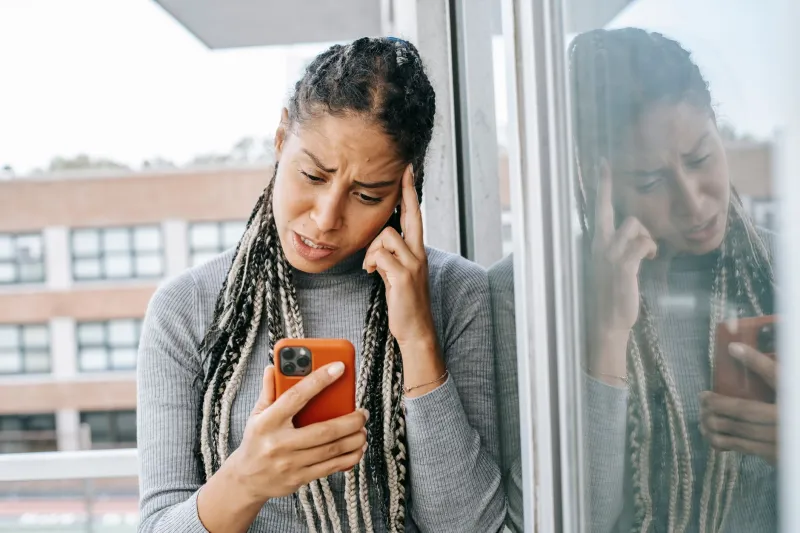
Somewhere between the third Zoom screen and the take-home technical assessment that nobody ever followed up on, Maya Chen stopped caring. She's a senior product manager with eight years of experience, two successful launches under her belt, and a LinkedIn profile that recruiters have been sliding into for years. In January, she applied to four SF-based startups. She heard back from one.
"It's not even that I'm bitter," she told us over coffee in the Mission. "It's that I adjusted my expectations. I assume silence now."
This is the communication collapse quietly reshaping San Francisco's tech hiring ecosystem. Companies complain they can't find talent. Candidates complain they can't get a callback. And somewhere in the middle, some of the best engineers, designers, and operators in the country are quietly signing offers with whoever moved fastest — which increasingly isn't the Bay Area company that had the better pitch deck.
The Numbers Behind the Silence
This isn't anecdotal. Recruiting platform data from early 2025 shows that average response times from SF tech companies to applicants have stretched to 12–18 business days for initial outreach — up from roughly six days in 2022. Meanwhile, candidate drop-off rates after a first interview have climbed sharply, with some recruiters reporting that as many as 40% of candidates who complete an initial call never receive structured follow-up.
For a city that built its identity on moving fast and iterating relentlessly, this is a strange place to find itself.
"The irony is brutal," says David Park, a recruiter who's worked with early-stage startups in SoMa and the Financial District for the past five years. "These founders will tell you they ship product in two-week sprints. But their hiring loop takes six weeks and involves five rounds. Nobody's connecting the dots."
What Candidates Actually Want (And It's Not That Complicated)
Talk to enough people who've been through the SF hiring gauntlet recently and a few themes emerge immediately. Transparency. Speed. And the basic courtesy of knowing where you stand.
Jordan Reyes, a full-stack developer who recently accepted a role at a mid-sized startup in Oakland after rejecting a longer process at a better-known SF company, put it plainly: "I just want to know if I'm still in the running. That's it. I don't need daily updates. I need someone to tell me yes, no, or not yet. The silence is what kills it."
This matters more now than it did even three years ago. The remote-work era fundamentally shifted candidate leverage. Top performers learned they could work for companies in Austin, New York, or fully distributed teams without ever needing to commute to a Caltrain stop. SF companies are competing with that reality, often without acknowledging it.
And then there's the ghosting-back phenomenon — candidates who, after experiencing one too many silent hiring loops, have started returning the favor. Offers accepted and then quietly abandoned. Final interviews skipped without notice. It's not good behavior, but it's a mirror.
The Companies Getting It Right
Not everyone is fumbling this. A handful of SF startups have quietly rebuilt their hiring communication from the ground up, and the results are showing up in offer acceptance rates and Glassdoor scores alike.
One fintech founder in Hayes Valley described implementing what her team calls a "48-hour rule" — no candidate goes more than two business days without a status update, even if that update is just a templated "still reviewing, expect to hear from us by Friday." Her team's offer acceptance rate climbed from 61% to 84% over six months.
"It sounds so basic," she admits. "But we had to actually put it in our recruiting handbook and make someone accountable for it. It doesn't happen on its own."
Other companies are shortening their interview loops aggressively — dropping from five or six rounds to three, combining stages, and making decisions faster. One Series A startup in the Dogpatch area cut their average time-to-offer from 34 days to 11 and saw their pipeline quality improve because candidates stopped dropping out midway through.
The Recruiter Squeeze
It's worth acknowledging that this isn't entirely a founder problem. The recruiting function at many SF startups has been gutted over the past two years. Layoffs hit HR and talent teams hard, and companies that scaled their recruiting infrastructure during the hiring boom of 2021 and 2022 are now running those same processes with a fraction of the staff.
"I'm managing 30 open roles," one in-house recruiter told us, asking not to be named because she's currently job hunting herself. "I cannot give every candidate the white-glove experience. I know it's bad. I'm doing my best."
This is a systems problem as much as a culture one. Startups that treat recruiting as a cost center rather than a core function are going to keep losing to the ones that don't.
What Needs to Change
The fix isn't complicated, but it does require intention. Candidates want communication cadences that are defined upfront — tell them at the start of the process when they can expect to hear back and then actually honor that. They want fewer rounds with clearer purposes. They want rejection delivered like a human sent it, not silence delivered like a server error.
And founders, specifically, need to understand that how a company hires is increasingly how candidates evaluate whether they want to work there. The interview process is a product. Right now, a lot of SF companies are shipping something broken.
Maya Chen, for what it's worth, eventually landed somewhere she's happy. A company in the East Bay reached out, moved through their process in under two weeks, and sent a written offer on a Thursday. She accepted by Friday afternoon.
"They just communicated," she said. "That was the whole thing."
In a city that prides itself on disruption, maybe the most radical thing a startup can do right now is answer the phone.