Nobody's Calling Back: The Slow Death of SF's Founder Mentorship Culture and the Scrappy Networks Rising in Its Place
There was a time — not that long ago, really — when getting a coffee with an experienced SF founder wasn't a particularly exotic achievement. The city ran on informal knowledge transfer. You'd get an intro through a mutual connection, meet at Sightglass or Ritual, and spend an hour downloading someone's hard-earned lessons about hiring, fundraising, and not imploding your cap table. It wasn't perfect, and it was absolutely gatekept along the usual fault lines of who you knew and what you looked like. But it existed. It was a thing.
Ask early-stage founders in 2025 about accessing that kind of mentorship and you'll get a different story. A lot of shrugged shoulders. A lot of "I've tried" and "nobody really responds." The informal mentorship economy that SF tech ran on for years has quietly seized up, and the people who needed it most — scrappy first-time founders without inherited networks — are the ones feeling it hardest.
What Actually Happened
The collapse isn't one single story. It's more like several overlapping ones that compounded over time.
First, a meaningful chunk of SF's experienced operator class left the city during the pandemic and hasn't really come back — at least not in the ways that matter for informal knowledge sharing. They're in Austin, in Miami, in Portugal. They're reachable via LinkedIn, technically, but the ambient availability that made mentorship happen organically is gone.
Second, the ones who stayed got busy in a different way. The 2021-2022 boom pulled a lot of experienced founders back into operating roles or aggressive angel investing, which meant their bandwidth for mentoring strangers dropped to near zero. And the 2023-2024 correction that followed made everyone more cautious, more insular, more protective of their time.
Jamila Reyes, who co-founded a climate-tech startup in SF three years ago, describes trying to access mentorship during her first year as "sending messages into a void." She had a handful of warm intros to well-known operators and got polite non-responses from most of them. "I don't blame them, exactly," she says. "People are stretched. But it did make me feel like I was trying to plug into a network that had quietly been switched off."
For his part, Marcus Chen — a veteran SF founder who successfully exited a SaaS company in 2019 and spent several years actively mentoring — is pretty candid about why he stepped back. "I was doing fifteen coffee chats a month at one point," he says. "I loved it, but I also burned out on it. And I started to feel like the same people kept getting access — people who already had warm intros, who already had some credibility. I wasn't sure I was actually moving the needle on equity."
That tension — between the genuine desire to give back and the exhausting, often inequitable reality of how mentorship actually flows — is something a lot of experienced operators are sitting with quietly.
The Vacuum and What's Filling It
Nature abhors a vacuum, and so does a city full of ambitious founders who need guidance. What's rising in place of traditional mentorship is messier, more horizontal, and in some ways more democratic — even if it's also less reliable.
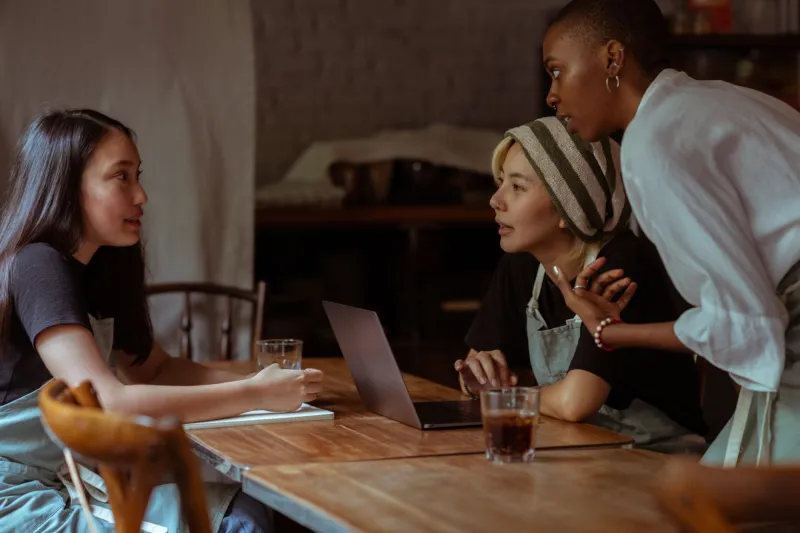
Peer accountability pods are one of the more interesting developments. These are small, self-organized groups of founders — usually four to eight people — who meet regularly to share numbers, trade advice, and hold each other accountable. They're not led by a seasoned mentor. They're more like distributed intelligence: everyone brings something, nobody has all the answers, and the value comes from the aggregate.
Reyes eventually found her way into one of these groups through a mutual connection in the climate-tech space. "It's nothing like having a mentor who's been through exactly what you're going through," she admits. "But it's also more honest, in a way. Nobody's performing expertise. We're all just trying to figure it out together."
Online communities are doing some of the work too, though with significant caveats. Founder-focused Discord servers and private Slack groups have proliferated, and some of them are genuinely useful. But the signal-to-noise ratio is brutal, and the most valuable knowledge — the specific, contextual, "here's what I'd actually do in your situation" kind — rarely lives in a public channel.
A few organizations are trying to build more structured alternatives. Cohort-based programs that pair early-stage founders with slightly-more-experienced peers (rather than veteran operators) are gaining traction. The logic is that someone who went through a seed round eighteen months ago might actually be more useful to a pre-seed founder than someone whose last fundraise was in 2015.
What's Actually Lost
It would be easy to be purely optimistic about all this — to frame the collapse of traditional mentorship as clearing space for something more equitable and interesting. And there's something to that. The old system was deeply flawed. Access was inherited. The same networks reproduced themselves.
But something real has also been lost, and it's worth naming it. There's a kind of knowledge that only transfers through direct, sustained relationship — the stuff that doesn't fit in a Discord thread or a peer pod check-in. The granular, embarrassing, specific lessons about what it actually feels like to navigate a down round or fire a co-founder or push back on a VC who's slowly taking over your board. That knowledge lived in the mentorship relationship, and it's not obvious where it lives now.
Chen, who's trying to figure out how to re-engage in a more sustainable and equitable way, thinks the answer might be more structured and less ambient. "Maybe the coffee chat model was always kind of broken," he says. "Maybe what actually works is office hours, or cohort mentorship, where there's some accountability on both sides. I don't know. I'm still figuring it out."
So is everyone else. The dial tone is gone, but founders are still picking up the phone. They're just calling each other now.