So You Heard SF Tech Is Dead? Here's Where Founders Actually Landed — and Why So Many Are Quietly Crawling Back
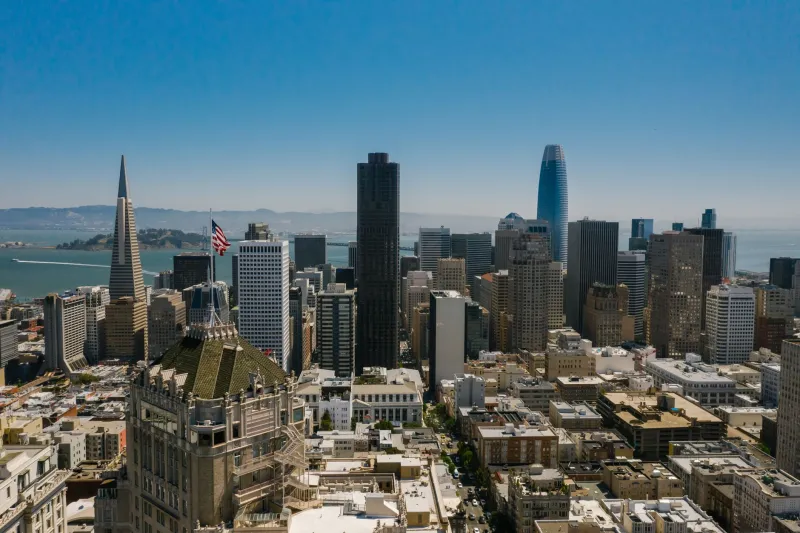
For a while there, it felt like every other LinkedIn post was some founder announcing their triumphant departure from San Francisco. Austin was the promised land. Miami was the vibe. Remote was the future. The Bay Area, we were told, had finally priced itself into irrelevance.
That was a good story. It just wasn't a complete one.
We've spent the last several months digging into migration data, talking to founders who left, founders who stayed, and founders who came back — sometimes sheepishly, sometimes with a whole new worldview. What we found is that the SF tech exodus is real in some ways, mythologized in others, and genuinely surprising in the parts nobody's really talking about.
The Cities That Actually Absorbed SF Talent
Let's be honest about which places made legitimate gains. Austin is the real deal — at least on paper. The number of SF-based tech founders who relocated to Texas between 2020 and 2023 is significant enough that it's changed the character of Austin's startup scene. Elon Musk's move wasn't just symbolic; it signaled permission for a certain kind of founder to stop apologizing for wanting lower taxes and less regulatory friction. Oracle, Tesla, and a wave of smaller startups followed.
But here's what the boosterism left out: Austin absorbed a particular type of founder. The ones who left weren't necessarily the most deeply embedded in SF's community networks. Many were mid-stage or growth-stage companies that had already made it — they weren't building their first thing here, they were optimizing an existing one. For that cohort, Texas made genuine financial sense.
Los Angeles pulled a different crowd. The entertainment-tech crossover that had always been LA's secret weapon got supercharged during the pandemic. Founders building at the intersection of creator economy, media, and consumer tech found LA genuinely compelling — not just as a lifestyle upgrade, but as a place where their customers actually lived and worked. The city has real startup infrastructure now in a way it didn't ten years ago, and that matters.
Miami is where the story gets complicated.
Miami Was Mostly a Vibe Check
No shade to Miami — it's a great city. But a meaningful chunk of what got reported as "Miami's tech boom" was, in retrospect, a prolonged vacation with good PR. The crypto crowd descended, Mayor Francis Suarez tweeted his heart out, and for about 18 months it genuinely felt like something was happening.
Some of it stuck. There are real founders and real funds that made permanent moves south. But the data on company formation, Series A activity, and talent retention in Miami tells a more modest story than the hype suggested. A lot of people tried it, liked the weather, and eventually found themselves flying back to SF for meetings often enough that the whole thing stopped making sense.
This isn't a knock on Miami's trajectory — it has real momentum. But it was never going to replace SF as a hub, and the founders who bet everything on that narrative found themselves rebuilding networks from scratch in a city that was still figuring out its own startup identity.
The Returnees Are the Real Story
Here's what nobody's covering enough: the founders who came back to SF didn't mostly come back because they failed somewhere else. A lot of them came back changed.
Spend enough time talking to returnees in the community — at co-working spaces in the Mission, at the kinds of low-key happy hours that have replaced the splashy launch parties of the 2010s — and a pattern emerges. These aren't people who tried Austin or Miami or Lisbon and got homesick. These are people who left with one set of values and came back questioning them.
The growth-at-all-costs mentality that defined Bay Area startup culture for most of the last decade started looking different when you stepped away from it. Some founders spent time in cities where the startup scene was smaller but more collaborative — where the pressure to raise your next round wasn't the only thing anyone talked about. They came back with a different appetite.
We're seeing this play out in real ways inside the SF tech community right now. There's a growing contingent of founders who are explicitly building for sustainability over scale, who are more interested in profitability than valuation, and who are skeptical of the VC treadmill in a way that would have been almost unspeakable in, say, 2018. Many of them are returnees.
What "Success" Means Here Is Being Renegotiated
This is the part of the story that doesn't fit neatly into a migration trend piece, but it might be the most consequential shift happening in the SF tech community right now.
The founders who left and came back didn't just bring themselves back. They brought a different frame for what they're trying to build. And because SF's startup culture has always been disproportionately shaped by the people most actively participating in it — the ones showing up to the dinners, the Slack channels, the informal advisory relationships — their changed perspective is starting to color the whole scene.
That's not to say the old guard is gone. The growth obsessives, the moonshot chasers, the founders who genuinely believe they're one pivot away from changing human civilization — they're still here, and they're still raising money. But they're sharing the room now with a cohort that's asking different questions. What does your cap table actually require of you? What happens to your team when the growth stops? What are you building, and for whom?
These aren't new questions, but they're getting louder.
So Is SF Tech Dead or Not?
No. Come on.
What's true is that SF's dominance is less total than it was. The talent is more distributed. The culture has competitors. Some of the founders who left made the right call for their specific situation, and some of those cities genuinely benefited.
But the death narrative always misunderstood what made SF's tech community powerful in the first place. It wasn't just the money or the weather or some magical innovation dust in the air. It was density — the specific, hard-to-replicate density of people who are all trying to build something, all within a few square miles of each other, bumping into each other constantly and cross-pollinating ideas in ways that don't happen on Zoom.
That density took a hit. It's rebuilding. And some of the people rebuilding it came back from their time away with a clearer sense of what they actually want from it.
That might end up being the most interesting thing that came out of the whole exodus — not the cities that gained, but the founders who returned with a different definition of what they were chasing in the first place.