The Return Ticket: Why Tech Teams Are Quietly Choosing San Francisco Again
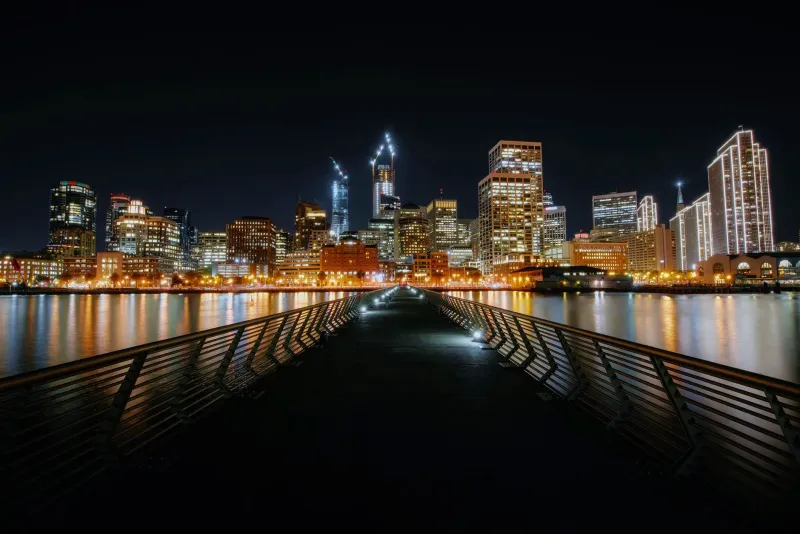
Sometime around 2021, declaring San Francisco dead became a minor industry unto itself. The headlines wrote themselves: tech workers fleeing to Austin, Miami, and Boise; offices gathering dust; the city's social contract fraying at the edges. And honestly? Some of that was true.
But here's what's happening now, and it's not making the same kind of noise: companies that went fully distributed — proudly, evangelically distributed — are quietly re-establishing roots in SF. Not abandoning remote work. Not forcing people back five days a week. But choosing San Francisco as the place where their leadership lives, where they hold offsites, where their physical address points.
This isn't a simple story about the office being back. It's more interesting than that.
The "Distributed But Anchored" Model
The phrase I keep hearing from founders right now is "distributed but anchored." It describes a company structure where most of the team can work from anywhere, but there's a deliberate gravitational center — and increasingly, that center is San Francisco.
Take Meridian Labs, a developer infrastructure company that went fully remote in 2020 with a team spread across nine time zones. By late 2023, the three co-founders had independently migrated back to the Bay Area. Not because their board made them. Not because they had an office lease to fill. But because, as CEO Jordan Park put it to us: "We kept having our most important conversations in person. We'd fly in for a week, get more done than in two months of Zoom, and then fly home. At some point you just do the math."
Meridian now has a small SoMa office — more like a permanent base camp than a traditional headquarters — and a team that's still 80% remote. But the anchor matters. The address matters. The ability to say "come to SF for a week" and have that mean something matters.
What Remote Didn't Deliver
I want to be careful here, because I'm not interested in writing another lazy "remote work failed" take. Remote work delivered a lot of things. Flexibility. Access to talent outside expensive coastal markets. Genuine work-life balance improvements for a lot of people who'd been grinding through brutal commutes. Those gains are real and shouldn't be dismissed.
But something else is also real: the things that happen when you're physically in the same city as the people who fund companies, acquire companies, and decide which technologies become infrastructure.
"There's a kind of information that doesn't travel over Slack," said Priya Anand, who co-founded a climate tech startup and spent two years running it entirely remotely from Portland before relocating to SF last year. "I'd hear about a funding round closing, a key hire someone made, a pivot a competitor was making — but I'd hear about it two weeks late. When I moved back here, I started hearing about things before they happened. That's not a small thing."
This is the serendipity argument, and it gets dismissed a lot as nostalgia or as cover for executives who just want their employees back where they can see them. But there's something substantive underneath it. Cities are information networks. San Francisco, specifically, is an extraordinarily dense information network for a very particular kind of information — the kind that shapes technology companies.
The Investor Proximity Factor
Let's talk about the thing people are sometimes reluctant to say plainly: being in San Francisco still makes it easier to raise money.
This is changing — slowly, genuinely — as more VCs build geographically distributed portfolios. But the data is still pretty clear. A disproportionate share of early-stage venture capital flows to companies with SF or Bay Area addresses. Partly that's historical inertia. Partly it's the warm intro dynamics we've written about elsewhere. And partly it's something more visceral: investors like being able to drop by.
"I've passed on great companies because they were fully remote with no physical presence here," admitted one seed investor we spoke with, who asked not to be named. "Not because I think remote doesn't work, but because I know I'll be a better board member if I can have dinner with the founders a few times a year without booking a flight."
For founders optimizing for fundraising — especially at seed and Series A stages where relationships drive decisions — proximity to capital is a real strategic consideration. And right now, most of the capital is still here.
The Tension Is Real, and It's Not Going Away
Here's where I want to push back on the triumphalist "SF is back, remote is dead" narrative that some people are eager to tell.
The founders who are returning to San Francisco are not returning to the old model. They're building something more hybrid, more intentional, and honestly more demanding — because it requires actually thinking about when in-person interaction creates value versus when it's just expensive theater.
And there are real costs to re-anchoring in SF. Housing costs remain brutal. Some of your best remote employees genuinely cannot or will not relocate, and you will lose some of them. The city's challenges — homelessness, infrastructure, public safety — haven't disappeared. Pretending otherwise is a form of magical thinking.
There's also a legitimate equity argument that gets lost in these conversations. Remote work opened doors for caregivers, for people with disabilities, for workers who couldn't afford to live in a major metro. A drift back toward physical presence in expensive cities risks closing those doors again. That's a real tension, and any founder or operator who isn't actively grappling with it is making a choice, even if they don't call it one.
What This Means for SF's Tech Identity
What I find genuinely interesting about this moment is that it might produce something better than what existed before the pandemic. The monoculture of 2015 SF tech — everyone in the same neighborhoods, the same bars, the same demographic — is not what's coming back.
What's coming back is more selective, more intentional, and in some ways more diverse. Founders are choosing SF with open eyes, knowing what the alternatives look like. They're building distributed teams that bring different perspectives into the company's DNA, while using the city as a hub rather than a cage.
San Francisco is still the place where the dial gets turned on what the technology industry becomes. That's not hype — it's geography, history, and network effects all compounding on each other. The question isn't whether the city matters. It's how we make sure it matters for more people than it used to.